how i brew tea
i wanted to try my hand at joining the bear carnival, which i think might be a great exercise in blogging for me! this month's theme is "how i ______", hosted by steven of tanzi media. i thought it'd be fun to share the different ways i brew tea and invite others to join me in celebrating asian tea!
in a gaiwan
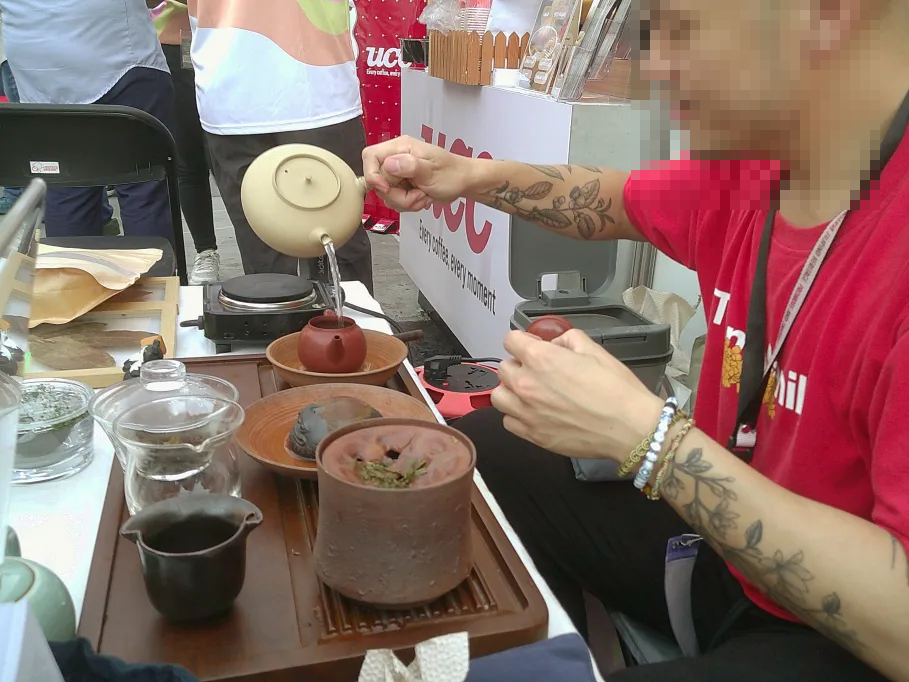
sometime early last year, i attended a local coffee festival with my family. we were there mostly because my brother is an aspiring home barista and wanted to check out different coffeeware and beans. i'm not super huge on coffee so the stall that caught my eye was a small one being run by a friendly looking guy holding a sign that read "come drink tea with me!". he started the tea session by introducing gōngfuchá (功夫茶/工夫茶), explaining what the preparation method entails and why it is practiced. he let us try three different teas that day: taiwanese duckshit oolong, a laotian green tea, and japanese gyokuro. i've always been a tea person but this was my first deep dive into chinese tea preparation methods and i was immediately obsessed.
when i visited hong kong a couple of months after, i made sure to include a tea class in my itinerary where i was instructed on how to use each piece of a gongfu tea set. since then, i've rarely brewed my loose leaf tea any other way.
how to brew tea the gongfu way
this is by no means definitive — especially because i'm lacking in some of the fancier equipment, but i did buy a gongfu tea set that had all of the essentials so that is what i will explain.
- prepare water according to your tea. green teas, white teas, and lightly oxidized oolongs will have lower brewing temperatures (typically 70-80c) while black teas, highly oxidized oolongs, and pu'er will have higher ones (90c-100c). i use a temperature controlled electric kettle, but you can also use a food thermometer or eyeball it with the bubble method.
- preheat your brewing equipment, which in my case includes a gaiwan, a fair pot1, and my tea cups. this is done by pouring the hot water all over the equipment. the logic behind this step is that if your teaware is cold when you pour the hot water in, it will cool down the water and potentially throw off your brewing temperature. if you have a tea boat2, you can douse your teaware as messily as you'd like. i unfortunately don't own one, so i do this step over my sink.
- wake up the tea leaves. i put roughly 3g of tea into my gaiwan and pour just enough water to cover all the tea leaves, then immediately pour the water out. this is done to help the first steep not be entirely flavorless. it's also good for separating tea leaves that have been compacted into cakes or rolled into balls.
- brew the tea. this step is done 3-5 times (10+ if using pu'er) depending on the tea you're drinking. darker teas will typically allow for more infusions. the brewing time is also dependent on the tea, and there is no strict time to follow. i typically start at ~45 seconds for the first infusion then increase the time by 10-15 seconds for subsequent infusions.
- distribute the tea. once brewed, i pour the tea into my fair pot but you can use pretty much any other cup as one. you can think of the fair pot like a pitcher. before pouring the tea into the teacup, i also like smelling the lid of my gaiwan. it kind of helps me process the flavor profile and i think it just smells good! if you're nitpicky about leaf litter you can pour your tea through a strainer too.
why gongfucha?
i like practicing gongfucha because i think it gives me a lot of mileage out of my tea. it's really interesting being able to have the same three grams of tea leaves taste entirely different depending on how many infusions you've done; whereas brewing your tea in one big teapot gives you more of an "average" of the flavor. because of how slow the process is, i also think it gives me more time to wind down and really appreciate or study what i'm drinking :)
in a chawan
as a fan of asian tea, it shouldn't be much of a surprise that i happen to enjoy drinking matcha. matcha has become quite popular lately, though mostly in the form of a latte. don't get me wrong, i enjoy matcha lattes too! i just wish there was a bit more appreciation for drinking usucha (thin tea) and koicha (thick tea) especially because everyone seems to be obsessed with "ceremonial grade" matcha — which doesn't even really exist, mind you.
i think it's more appropriate to categorize matcha quality into culinary grade, usucha grade, and koicha grade. a lot of the matcha influencers seem to recommend for lattes are usucha and koicha grade, which isn't bad, but sometimes not very cost efficient or a good fit. milk severely cuts down flavor. for example, i love yamamasa koyamaen's samidori in lattes but yamamasa koyamaen's more expensive offering shikibu-no-mukashi is dreadful in lattes. its flavor profile is far too mild for milk, where it completely disappears. on its own however, it is delightfully creamy and full of umami. i could go on about the misinformation surrounding matcha but i'm going to cut my rant short and just tell you how i brew it, which is what you came here for.
how to prepare matcha in a chawan
- prepare water according to your matcha. earlier i mentioned that most green tea (which matcha is, by the way. it is finely ground tea leaves!) is brewed at 70-80c, so that is the temperature range i work with. different matcha have different brewing temperatures, and if it's not mentioned on the website i typically start at 80c then adjust accordingly.
- preheat your brewing equipment. just like in gongfu, you can help keep the temperature of your water stay consistent by preheating your chawan. it is also good to have the tines of your chasen submerged in hot water prior to whisking. this helps soften the tines making it less prone to breakage.
- sift your tea in, or don't? when drinking lower end matcha (especially culinary grade ones), i will sift my matcha powder in to help minimize grittiness; a trait that can be attributed to a lack of grinding during the production process. higher quality matcha is usually very fine and won't require sifting. i have a coffee scale for precise measurements, but a full chashaku scoop will usually amount to one gram while a packed teaspoon is usually two grams.
- whisk, whisk, whisk!3 time for an arm workout! after pouring in my hot water, i whisk the tea with my chasen in a W shape for about one minute.
- pour or drink. if i'm making a latte or matchacano, this is when i pour my matcha into a glass containing milk or water. if i'm making usucha or koicha, i usually just drink straight from the chawan! sometimes i'll pour it into one of my tea cups, but that depends on my mood.
my matcha ratios
usucha
- 2g matcha powder
- 70g water
koicha
- 3g matcha powder
- 25g water
latte
- 4g matcha powder
- 40g water
- 100-120g milk
- 15g syrup
i don't normally drink my lattes with sweetener, but if you want to use one i think maple syrup or simple syrup pairs the best with matcha. if you want to make your own, either earl grey syrup or banana cinnamon syrup are great choices and easy to make at home! you can replace the milk with water for a matchacano and the matcha powder with hojicha for a hojicha latte by the way! :)
there you go! that's how i brew my tea. i still use a good ol' classic teapot when i need a big batch but that's not too often these days. i do also want to stress that i often tweak my brewing process according to the tea i'm drinking, but what i've written is what i would consider my "standard". i hope this was helpful and informative for anyone looking to try experiencing tea in a new way. i'm no expert but if you have questions (and especially corrections) or just want to chat tea, feel free to contact me!
happy brewing, bear :)
an item used to hold tea before it is poured into tea cups, ensuring that everyone gets the same quality brew!↩
a "tray" where you place all of your teaware during tea preparation. it's meant to catch all of the excess water.↩
fun fact! did you know that whisking tea originated in china during the song dynasty?↩